
A rubber cable jacket sitting in a warehouse for six months can develop the same surface cracks that would take a lab only 96 hours to reproduce artificially. That gap between real-world aging and lab-accelerated aging is exactly why ozone resistance testing exists - and why choosing the correct standard matters just as much as choosing the correct chamber.
This article breaks down what actually separates LIB Indsutry's ISO 1033 Ozone Test Chamber from an ASTM D1149 test setup, then looks at how a real cable manufacturer used one to validate product performance, how it compares to xenon-arc testing, and what buyers commonly ask before placing an order.
ISO 1033 Ozone Test Chamber vs ASTM D1149 Ozone Test Chamber
Standard Differences in Ozone Testing
Although both methods expose stretched rubber to a controlled ozone atmosphere and look for surface cracking, the technical details differ enough that results are not directly interchangeable between the two.
| Item |
ISO 1033 Ozone Test Chamber (built to ISO 1431-1) |
|
|---|---|---|
| Governing Standard | ISO 1431-1 | ASTM D1149 |
| Origin | International (ISO) | United States |
| Specimen Type | Ring or strip specimens | Strip specimens |
| Strain Method | Static and dynamic tensile strain | Primarily static strain |
| Standard Ozone Concentration | 25–100 pphm (commonly 50 pphm) | 50 pphm (typical reference level) |
| Standard Test Temperature | 40°C ± 2°C | 40°C ± 1°C |
| Concentration Verification | UV absorption reference method | UV or chemical (KI) methods historically accepted |
| Typical Exposure Duration | 24–96 hours (application dependent) | 70–100 hours (application dependent) |
| Common Users | Global automotive, electrical, industrial | US-based automotive, cable, and rubber suppliers |


Other Standards LIB Industry's ISO 1033 Ozone Test Chamber Meets, and How It Works
Beyond ISO 1431-1, LIB Industry's ISO 1033 Ozone Test Chamber is engineered to also support ASTM D1149, DIN 53509, and Volkswagen PV3305, allowing one chamber to serve multiple export markets without re-qualification. The working principle centers on an ozone generator that produces controlled concentrations between 1 and 1000 pphm, monitored continuously through UV photometric sensing so the reading stays accurate even as ambient conditions shift. Temperature is held between 0°C and +100°C with fluctuation limited to ±0.5°C and deviation within ±2.0°C, while humidity is regulated across a 30–98% RH range. A rotating sample holder (0–10 r/min) keeps specimens evenly exposed to the ozone stream, and clamps capable of 5–35% tensile stretch allow both static and dynamic strain conditions specified across the different standards.
ISO 1033 Ozone Test Chamber Test Method
Following ISO 1431-1, specimens are first mounted under static or dynamic strain using the specified clamps, then placed inside the pre-conditioned chamber once ozone concentration and temperature have stabilized at the target setpoint. The chamber maintains the selected ozone level - typically 50 pphm at 40°C - for the required exposure period, with the ozone concentration itself verified using the UV absorption reference method described in ISO 1431-3. At the end of exposure, specimens are removed and examined under magnification for surface cracking, and results are recorded against a defined crack rating scale to determine pass or fail status.
Cable Manufacturer Reports High Satisfaction With ISO 1033 Ozone Test Chamber
A cable manufacturer recently used LIB Industry's ISO 1033 Ozone Test Chamber to validate the long-term outdoor performance of insulated and jacketed cable products before shipment. The customer specifically needed a chamber capable of switching between ISO 1431-1 and DIN 53509 protocols for different export markets, and reported that the equipment met both testing standards without requiring separate machines.
Several factors stood out to the customer:
Testing accuracy and safety. Temperature fluctuation stayed within ±0.5°C and ozone concentration held steady across the full 1–1000 pphm range, giving repeatable crack-resistance results across multiple test batches. Built-in protections - over-temperature protection, ozone leakage protection, door safety interlock, and emergency stop - meant the operating team could run extended cycles with confidence.
International compliance. The chamber's electrical design follows CE requirements and aligns with IEC and CSA safety concepts, which mattered directly for a customer shipping cable products into multiple regulatory regions.
Cost-effective, customizable operation. LIB Industry provided free customization of the sample holder configuration at no added cost, along with a 36-month warranty and lifetime after-sales support, which the customer noted significantly reduced long-term ownership risk. On-site training during commissioning also meant operators were fully independent within days of installation.
The customer summarized the experience as a chamber that combined accurate, standard-compliant results with a support structure that made day-to-day operation straightforward.
ISO 1033 Ozone Test Chamber vs ASTM G155 Xenon Arc Test Chamber: How to Choose
Both chambers are frequently requested for cable testing, but they evaluate completely different degradation mechanisms.
| Item |
|
|
|---|---|---|
| Test Medium | Ozone gas (O₃) | Xenon arc light source |
| Primary Failure Mode | Surface cracking under strain | UV degradation, fading, chalking |
| Governing Standard | ISO 1431-1, ASTM D1149, DIN 53509 | ASTM G155 |
| Sample Condition | Stretched (static/dynamic strain) | Static, unstrained |
| Test Focus | Elasticity loss, ozone crack resistance | Color/gloss retention, UV weathering |
| Cable Application | Jacket and insulation ozone aging | Outer sheath UV and light exposure |


For cable products, manufacturers often need both: the ISO 1033 Ozone Test Chamber confirms the jacket won't crack under mechanical stress combined with ambient ozone, while the ASTM G155 Xenon Arc Chamber confirms the same jacket resists UV-driven surface degradation over years of sunlight exposure. Choosing between them should be based on the specific failure mode the product needs to survive - cracking under strain points to ozone testing, while fading or embrittlement from sunlight points to xenon-arc testing.
LIB popular ozone and Environmental Chambers


Accelerated Sulfur Dioxide Corrosion Testing, Precise Material Durability Assessment

Multi-Gas Environmental Corrosion Simulation, Comprehensive Reliability Testing for Electronics and Metals

Test Large Products with Ease, Walk-In Space for Maximum Capacity
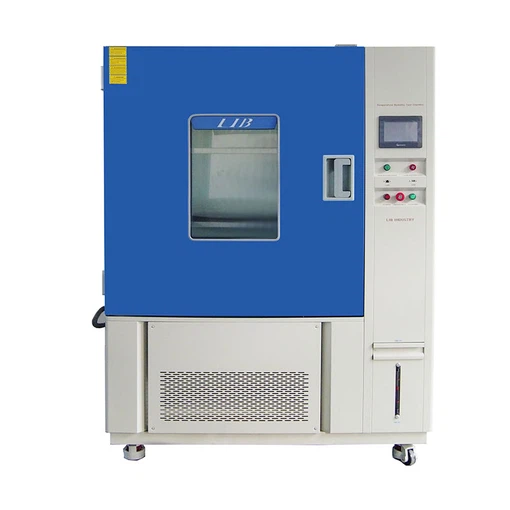
Reliable Temperature & Humidity Testing, Versatile Solution for Daily Laboratory Use
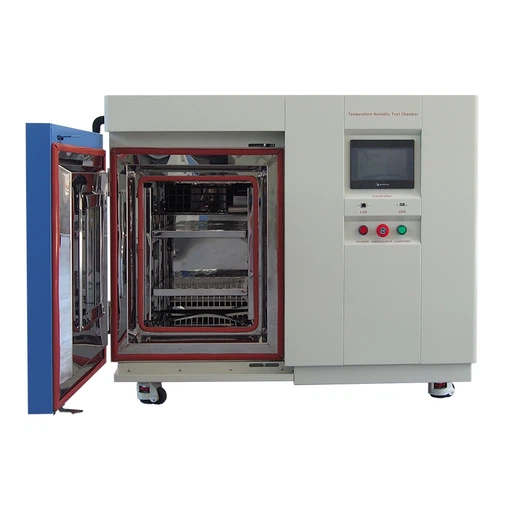
Compact Size with Big Performance, Precise Testing Right on Your Workbench
FAQs on the ISO 1033 Ozone Test Chamber
Q1: How long does manufacturing take?
Standard units typically require 15–25 working days; customized configurations may take longer depending on the requested features.
Q2: What after-sales service is included?
LIB Industry provides a 36-month warranty, lifetime technical follow-up, spare parts supply, and calibration assistance.
Q3: How is the chamber shipped internationally?
Units are packed in export-grade wooden crates with shock protection and moisture-resistant wrapping, with sea freight, air freight, and door-to-door logistics available.
Q4: Is on-site or remote installation support available?
Yes. LIB Industry offers both remote commissioning guidance and on-site installation and training depending on customer location and project scope.
Q5: Can the chamber be customized for specific customer standards?
Yes, including custom sample holders, strain fixtures, and multi-standard programmability at no additional design cost.
Contact Us for Your Test Chamber Needs
If you're in the market for a rubber or cable durability chamber, whether it's anISO 1033 Ozone Test Chamber, an ASTM G155 UV Test Chamber, an SO2 Noxious Gas Corrosion Test Chamber, or an ISO 4892-2 Xenon Test Chamber, don't hesitate to reach out. We're ready to discuss your sample type, applicable testing standards, strain and exposure requirements, and space constraints, and help you find the right ozone or accelerated aging test solution for your laboratory.
References
LIB Industry Technical Team, Technical information, testing methods, product specifications, and application guidance for ozone, xenon-arc, and gas corrosion test equipment.


