Solar photovoltaic modules are constantly exposed to sunlight, heat, moisture, and long-term environmental stress. In real outdoor conditions, degradation happens slowly-often over 10 to 25 years. But manufacturers cannot wait that long to validate durability. That is why accelerated laboratory simulation is essential.
In real customer applications, the performance and stability of LIB UV Exposure Chamberfor PV Moduleshave been widely recognized. For example, an Australian customer reported after sensor installation and troubleshooting: "Works perfectly fine now. Thank you for your kind reply. Please refer to the maintenance processing list above, and maintain the chamber regularly to make it serve better for you. You are welcome :)" The user confirmed that the UV test chamber operated smoothly without any issues after support, and the testing process ran normally. This reflects the reliability and ease of maintenance of LIB UV testing systems in daily laboratory use.
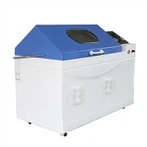
This article explains why the UV Exposure Chamber For PV Modules is critical for solar panel reliability testing, how it works, and how LIB's advanced system supports standardized accelerated aging under IEC requirements.
UV Exposure Chamber For PV Modules gives key advantages in PV testing
1.Natural weathering vs laboratory UV simulation
In real outdoor environments, PV modules face inconsistent UV intensity, seasonal changes, rain, dew, and temperature fluctuations. These factors make degradation unpredictable and slow to measure.
In contrast, a UV Exposure Chamber For PV Modules provides:
① Controlled UV intensity (no seasonal variation)
② Stable temperature conditions (typically 60 ± 5°C)
③ Accelerated aging in a short test period
Instead of waiting years for field exposure, engineers can reproduce equivalent damage in hundreds of hours under laboratory conditions.
2. What the chamber actually tests on PV modules
The chamber focuses on identifying weak points in solar panels, including:
① EVA encapsulant yellowing and cracking
② Backsheet UV degradation
③ Adhesive failure between layers
④ Optical loss in polymer materials
By simulating UV radiation in the range of 280 nm to 400 nm, the system evaluates how well protective materials resist long-term solar exposure damage.
3. Standard-based testing method (IEC 61215)
Testing is carried out under the international standard:
IEC 61215 (UV Preconditioning Test)
Key requirements include:
① Module temperature: 60 ± 5°C
② UV irradiance measurement accuracy: ±15%
③ Wavelength range: 280–400 nm
④ UV exposure uniformity: ±15% across test plane
This ensures that all test results are globally comparable and certification-ready for PV module qualification.
Working principle of LIB UV Exposure Chamber For PV Modules
The LIB system is designed to simulate solar UV stress in a controlled and repeatable environment.
Main working process:
① UV lamps (UVA + UVB combination) generate controlled radiation
② Temperature control system maintains ambient to 90°C ±2°C
③ Black panel temperature is stabilized between 35–80°C
④ Sensors continuously monitor UV intensity and temperature
⑤ Specimens are mounted at fixed angles for uniform exposure
The chamber reproduces both photochemical degradation (UV exposure) and thermal stress, which are the two main failure drivers of PV materials in real outdoor use.


LIB UV Exposure Chamber For PV Module under IEC 61215 standard
The most widely used configuration follows IEC 61215 UV preconditioning cycle:
1. Standard UV exposure cycle:
UV irradiation: continuous exposure in UVA + UVB range
Total UV dose:
① 280–320 nm: 7.5 kWh/m²
② 320–400 nm: 15 kWh/m²
③ Maximum irradiance: < 250 W/m²
④ Temperature: 60°C ±5°C module temperature requirement
This cycle is used before thermal cycling and humidity freeze tests to reveal early-stage material weakness.
2. LIB UV Exposure Chamber model
LIB's UVP-02 model is engineered specifically for this standard:
|
Name |
|
|
Model |
UVP-02 |
|
Internal Dimension (mm) |
1450*745*2500 D*W*H |
|
Overall Dimension (mm) |
1875*1210*2800 D*W*H |
|
Specimen Holder Size(mm) |
1400*2400 W*H |
|
Specimen Capacity |
2 Pieces |
|
Irradiation Source |
Fluorescent UVA lamps (20 pieces) and UVB lamps (10 pieces) |
|
Temperature Range |
Ambient ~ 90 ℃ ±2℃ |
|
Black Panel Temperature (BPT) |
35 ~ 80 ℃ |
|
Bandwidth |
UVC: (< 0.1%) UVB: (3% to 10% of total UV) UVA: (90% to 97% of total UV) |
|
Irradiance Control |
●The wavelength of 280 nm - 320 nm:7.5 k Wh/m2 ●The wavelength of 320 nm - 400 nm:15 k Wh/m2 ●Maximum Irradiance in the UV range: < 250 W/m2 |
|
Controller |
Programmable color LCD touch screen controller |
|
Exterior Material |
Steel Plate with protective coating |
|
Interior Material |
SUS304 stainless steel |
|
Thermal Insulation |
Polyurethane foam and insulation cotton |
|
Power Supply |
AC380V 50Hz 3Phase |
3. LIB advantages in PV UV testing
1. High UV accuracy and stability
Ensures irradiance deviation stays within ±15%, meeting IEC certification requirements.
2. Multi-spectrum UV simulation
Combines UVA (90–97%) and UVB (3–10%) to replicate real sunlight damage mechanisms.
3. Precise temperature control system
Maintains module surface stability between ambient and 90°C with ±2°C accuracy.
4. Adjustable sample holder design
Supports different PV module sizes and ensures consistent exposure distance.
5. Programmable intelligent controller
Allows full automation of IEC test cycles with data recording and export.
FAQs on the LIB UV Exposure Chamber For PV Modules
Q1: What industries use this chamber?
It is mainly used in photovoltaic manufacturers, material research labs, and certification testing organizations to evaluate solar module durability.
Q2: Does LIB provide installation and training service?
Yes. LIB provides full technical support including: On-site installation, Operator training, Standard test procedure guidance (IEC 61215, IEC 61730), Remote troubleshooting support
Q3: How is the equipment shipped and installed?
The chamber is delivered in reinforced packaging. LIB engineers can support: Remote commissioning, On-site installation (optional service), Calibration and system validation before operation
Q4: What maintenance is required?
Routine maintenance includes: UV lamp inspection and replacement, Sensor calibration, Air circulation filter cleaning. These steps are simple and typically take only a few minutes.
Q5: Can the chamber run continuous long-term tests?
Yes. The system is designed for continuous operation with stable UV output and temperature control for long-duration aging cycles.
LIB UV Exposure Chamber For PV Modules provides a reliable and standardized solution for accelerated solar material aging, fully aligned with IEC 61215 requirements. It helps manufacturers shorten validation cycles, improve material selection, and reduce long-term product failure risk. Everything you need to build a stable, repeatable, and certification-ready UV testing workflow for PV modules.
Contact LIB Industry for technical support, quotation, or customized PV UV testing solutions.