


If you've ever worked with composite materials-whether in aerospace, automotive, marine, or even sports equipment-you know their unique blend of strength, lightweight properties, and durability makes them game-changing. But there's a catch: composites react differently to environmental stress than metals or plastics, and testing that reaction requires precision. That's where a lot of my customers, especially engineers just getting started with material testing, ask me a common question: "Can a temp chamber be used for composite material testing?"
The short answer is yes, but it's not a one-size-fits-all scenario. As someone who's spent 12 years designing and building temperature chambers for industrial testing, I've seen firsthand how a standard temp chamber can work for basic composite tests, but specialized configurations deliver the reliable, actionable data that industries like aviation and medical devices demand. Let's break this down so you can decide what makes sense for your testing needs.
First, let's ground this in what composite materials actually require. Composites are made of two parts: a reinforcing fiber (carbon, glass, aramid) and a polymer matrix (epoxy, vinyl ester, thermoplastic). When exposed to extreme temperatures, humidity, or rapid thermal shifts, these two components behave differently. For example, a carbon fiber reinforced epoxy might have a very low coefficient of thermal expansion (CTE) for the fibers, but the epoxy matrix can expand and contract at a much higher rate. That mismatch can cause delamination-layers of the composite pulling apart-over time, which is a critical failure mode you can't miss.
So a temp chamber's job here is to replicate the environmental conditions the composite will face in service. A basic chamber can control temperature from, say, -40°C to 180°C, which works for testing how a sample's tensile strength changes in hot or cold. But if your application is something like a wind turbine blade, which sits outside in fluctuating weather, you'll need more than just temperature control. That's where understanding the difference between standard and specialized temp chambers comes in.
Let's start with the basics: what a standard temperature chamber can do for composites. If you're just looking to screen samples-checking for obvious defects after a single high-temperature bake or cold soak-a basic chamber is sufficient. For example, a automotive component made of glass fiber reinforced polypropylene (PP) might need to be tested at 85°C for 1,000 hours to ensure it won't warp under the hood. A standard chamber can hold a steady temperature with an accuracy of ±1°C, which is enough for that initial screen. But here's the limit: standard chambers don't handle humidity well, and their thermal cycling rates are slow, which means you might miss more subtle degradation.
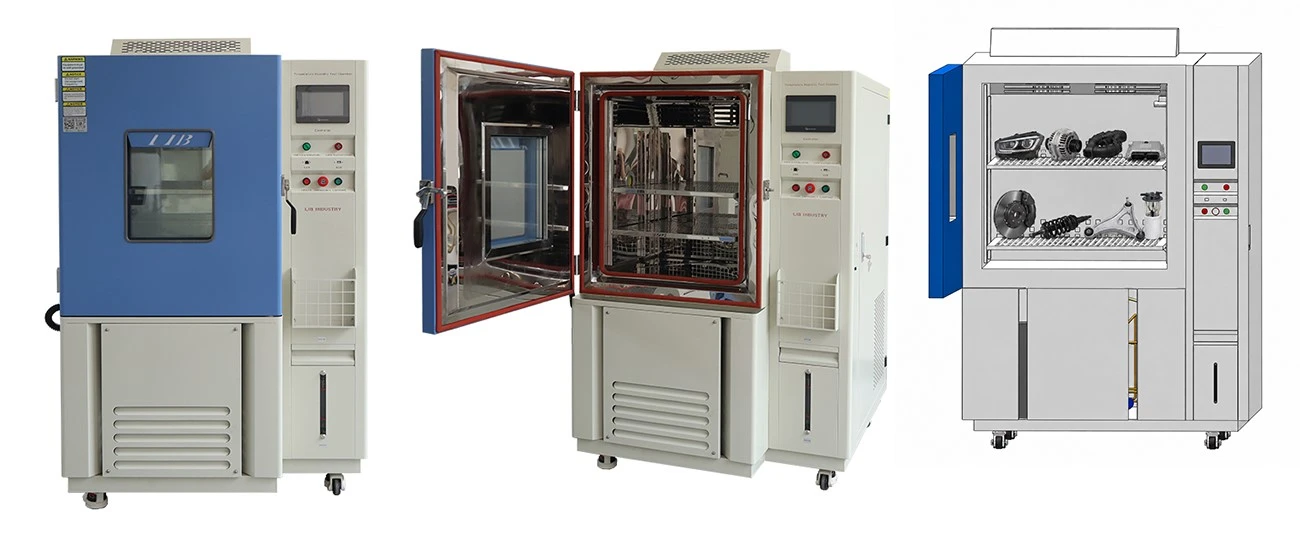
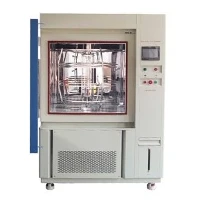
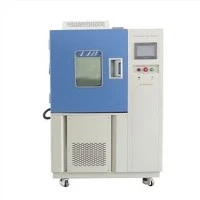
That's where specialized chambers start to matter. For composites, two of the most common environmental stressors are temperature and humidity-called "moisture absorption"-because the polymer matrix will absorb water, which weakens it and changes its CTE. If you skip humidity testing, you might have a composite that passes all temperature tests but fails in the field because it was exposed to rain or high humidity. This is why many engineers turn to a Temperature Humidity Climate Chamber, which combines precise temperature and humidity control (from -70°C to 180°C and 10% to 98% RH) to simulate real-world moisture conditions. For example, testing a carbon fiber epoxy sample at 60°C and 90% RH for 30 days lets you measure how moisture reduces its interlaminar shear strength (ILSS)-a key property that prevents delamination.
Another critical factor for composites is thermal cycling, not just steady temperature. Thermal cycling is rapid shifts between hot and cold, which mimic things like a satellite orbiting Earth (exposed to extreme heat and cold every 90 minutes) or a car driving from a cold parking lot to a hot highway. A standard chamber might take 30 minutes to go from -40°C to 120°C, but a specialized chamber can do that in 5 minutes, creating far more realistic stress. For composites, this rapid cycling amplifies the CTE mismatch between fibers and matrix, accelerating delamination that would take years to show up in service. If you're testing for aerospace applications, you might also need to combine thermal cycling with vibration-another real-world stress. That's where an ESS Thermal Cycling and Vibration Chambers come in; they pair rapid thermal shifts with sinusoidal or random vibration to test how composites hold up under combined load, which is much closer to real use than testing temperature and vibration separately.
Wait, what about ESS chambers? ESS stands for Environmental Stress Screening, and these chambers are designed to apply rapid temperature changes, often at rates of 10°C per minute or more, to trigger defects in materials or components. For composites, ESS is especially useful because it can catch hidden manufacturing defects-like incomplete curing of the matrix or poorly bonded fiber layers-that would only cause failure after long-term use. I've had a customer in the aerospace industry use an ESS Chamber to test carbon fiber composite aircraft brackets; they found a 2% delamination in a sample that passed all steady-temperature tests, which would have been a disaster in flight. ESS chambers are built with tight temperature uniformity (±0.5°C) and fast ramp rates, making them ideal for composite screening, unlike standard chambers which can have hot or cold spots that skew test results.
Now, let's talk about a common misconception: all temp chambers are the same for composites, but that's not true. For example, if you're testing composite materials used in electronics-like a circuit board substrate made of fiberglass reinforced epoxy-you need a chamber that can handle the specific thermal and electrical testing requirements. That's an Electronics Environmental Testing Chamber, which is designed to work with small electronic components and has features like leak detection for flammable materials (some composite matrices are highly flammable when heated). For electronics composites, you might test for thermal shock between -55°C and 125°C, cycling every 10 minutes, to ensure the substrate doesn't crack or delaminate when the circuit board heats up during use.
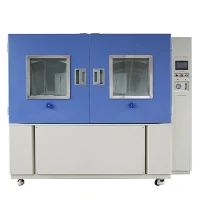
Another point to consider is the size of your test sample. Some composite parts, like wind turbine blades or large marine hull sections, are too big for standard benchtop temp chambers. But even if you're testing small coupons, the chamber's temperature uniformity is non-negotiable. If a sample has a 10°C difference between its center and edges, the test results will be inconsistent-some areas will have higher strength than others, and you won't get an accurate average. That's why specialized chambers, like a Thermal And Humidity Chamber, are built with air-circulation systems that ensure ±0.5°C uniformity across the entire test volume, even for large samples.
I should also mention the importance of data logging. When testing composites, you need precise, timestamped data on temperature, humidity, and sample properties (like strength, modulus, or ILSS) to correlate environmental stress with performance. Many of our temp chambers come with built-in data logging software that lets you track every minute of the test, so if a sample fails, you can exactly what conditions it was exposed to. For example, if you're testing a thermoplastic composite (which can melt instead of just soften at high temperatures), you need to know exactly when the sample reached its glass transition temperature (Tg) so you can adjust your test parameters accordingly.
Let's also cover a real-world example to put this all in context. Last year, a startup making electric vehicle (EV) battery enclosures came to me with a problem: their initial composite enclosure was failing thermal cycling tests, but they couldn't figure out why. They were using a standard temp chamber, but when they switched to a chamber with rapid thermal cycling (15°C per minute) and humidity control, they found that the enclosure's glass fiber matrix was absorbing moisture during high humidity tests, then expanding when heated, which caused the layers to separate. Using a Temperature Humidity Climate Chamber, they adjusted their manufacturing process to add a moisture barrier layer, and the enclosure passed all tests. That's exactly why specialized temp chambers aren't just nice to have-they're critical for developing reliable composite components.
Now, when is a standard temp chamber not enough? If you're testing composites for high-stakes applications like aerospace, medical devices, or EV batteries, you can't rely on a basic chamber. Here's why: standard chambers have slow ramp rates, poor humidity control, and low temperature uniformity, which can lead to false negatives (a sample fails when it should pass) or false positives (a sample passes when it should fail). For example, a medical device composite used in a pacemaker needs to be tested for long-term exposure to body heat (37°C) and humidity (close to 100% RH) for 10 years. A standard chamber can replicate that, but a specialized chamber with extended test duration capability and precise humidity control will give you data that's accepted by regulatory bodies like the FDA, which is non-negotiable for medical devices.
What about cost? A common question I get is, "Do I need to spend $50k on a specialized chamber when a $10k standard chamber works?" The answer depends on your testing goals. If you're a small business testing samples for internal R&D, a standard chamber might suffice for initial testing. But if you're selling composite components to customers who require third-party testing, you'll need specialized chambers to meet their standards. For example, NASA's testing requirements for composite materials mandate thermal cycling rates of at least 5°C per minute and humidity control, which standard chambers can't meet. Investing in the right chamber upfront saves you time and money in the long run, because you won't have to retest samples later in specialized equipment.
Another thing to consider: calibration and maintenance. Temp chambers for composite testing need to be calibrated regularly to ensure accuracy. Standard chambers often have simpler calibration processes, but specialized chambers (like ESS chambers with rapid ramp rates) need more frequent calibration to maintain their performance. That's why working with a supplier who offers calibration services and support is important-you want to make sure your chamber stays accurate for years.
Let's circle back to the original question: Can a temp chamber be used for composite material testing? The answer is: Yes, but you have to choose the right type. A standard temp chamber works for basic screening and low-stakes applications, but specialized chambers with precise temperature, humidity, and rapid thermal cycling control are required for reliable, industry-compliant testing of composite materials. The key is to match the chamber's capabilities to your application: if you're testing aerospace composites, go for an ESS chamber or one with rapid thermal cycling; if you're testing electronics composites, use an Electronics Environmental Testing Chamber; if you need temperature and humidity, a Thermal And Humidity Chamber or Temperature Humidity Climate Chamber will be your best bet.
If you're still not sure which chamber is right for your composite testing needs, or if you have specific questions about testing parameters, our team is here to help. We've worked with hundreds of companies across industries, from startups to Fortune 500 aerospace manufacturers, to design temp chambers tailored to their composite testing requirements.
Explore LIB Industry's range of Temperature Chambers, Temperature Humidity Test Chambers, Small Temp Chamber and ESS Environmental Test Chambers. Whether you need basic temperature screening, humidity exposure testing, or rapid thermal cycling for composite materials, LIB Industry can recommend the right equipment based on your composite type, sample size, test conditions, and applicable standards. Contact LIB Industry today to discuss your composite material testing needs and get a customized environmental test chamber solution.