

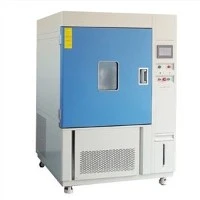
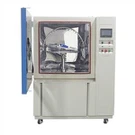
Hey there! As an aging oven supplier, I often get asked some pretty interesting questions. One that popped up recently is, "Can an aging oven be used for aging foams?" Well, let's dive right into this topic and see what's what.
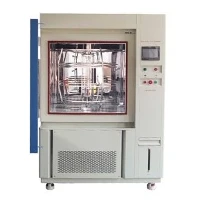
First off, let's understand what an aging oven is. An aging oven is a piece of equipment designed to simulate long - term environmental conditions in a relatively short period. It can control factors like temperature, humidity, and sometimes even exposure to certain gases. These ovens are used in various industries to test the durability and performance of materials over time.
Now, foams are all around us. From the cushions in our sofas to the insulation in our walls, foams play a crucial role in our daily lives. When it comes to aging foams, the goal is to understand how they will perform over time. Will they retain their shape? Will they lose their elasticity? Will they degrade and become brittle?
So, can an aging oven be used for aging foams? The short answer is yes, but there are some important things to consider.
Temperature Control
Temperature is a key factor when it comes to aging foams. Different types of foams have different temperature sensitivities. For example, polyurethane foams can start to break down at relatively high temperatures. An aging oven allows you to precisely control the temperature to simulate real - world conditions. You can set the oven to a specific temperature for a certain period to see how the foam responds.
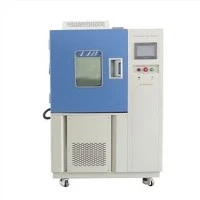
If you're interested in a high - quality temperature - controlled solution, check out our Temperature And Humidity Controlled Cabinet. It offers excellent temperature stability, which is crucial for accurate foam aging tests.
Humidity Considerations
Humidity can also have a significant impact on foams. Moisture can cause foams to swell, which may lead to changes in their mechanical properties. An aging oven can control humidity levels, allowing you to study how foams react to different moisture conditions. Some foams are more resistant to humidity than others, and an aging test can help you identify which foams are best suited for humid environments.
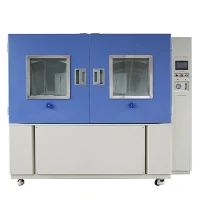
Our Constant Temperature And Humidity Chamber is a great option if you need to control both temperature and humidity during the foam aging process. It provides a stable environment for accurate testing.
Aging Time
The length of the aging process is another important factor. In real - world scenarios, foams can age over years or even decades. While an aging oven can accelerate the process, you need to carefully select the aging time. If you age the foam for too short a time, you may not get accurate results. On the other hand, aging it for too long could lead to over - degradation, which may not reflect real - world conditions.
Gas Exposure
In some cases, foams may be exposed to certain gases in their environment. For example, in industrial settings, foams may come into contact with chemicals or pollutants. An aging oven can be equipped to simulate gas exposure, allowing you to test how foams react to these substances. This is particularly important for foams used in applications where they may be exposed to harsh chemicals.
Testing Different Foam Types
Not all foams are created equal. There are different types of foams, such as open - cell foams and closed - cell foams. Open - cell foams are more porous, which means they can absorb more moisture and gases. Closed - cell foams, on the other hand, are more resistant to moisture and have better insulation properties. An aging oven can be used to test both types of foams to understand their unique aging characteristics.
Mechanical Stress
In addition to environmental factors, mechanical stress can also affect the aging of foams. For example, foams used in cushions are constantly subjected to compression and relaxation. Some advanced aging ovens can be integrated with Temperature Stress Testing Machine to simulate mechanical stress during the aging process. This provides a more comprehensive understanding of how foams will perform in real - world applications.
Advantages of Using an Aging Oven for Foam Aging
- Accelerated Testing: As mentioned earlier, an aging oven can significantly reduce the time required to test the aging of foams. Instead of waiting for years to see how a foam will perform, you can get results in a relatively short period.
- Controlled Environment: With an aging oven, you have full control over the testing environment. You can precisely set the temperature, humidity, and other factors, ensuring consistent and accurate results.
- Cost - Effective: Conducting long - term real - world tests can be expensive. An aging oven provides a cost - effective alternative by allowing you to test multiple samples simultaneously under controlled conditions.
Limitations
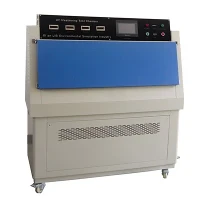
- Simplified Simulation: While an aging oven can simulate many environmental factors, it can't fully replicate all the complex real - world conditions. For example, it may be difficult to simulate the exact sunlight exposure and UV radiation that foams may experience outdoors.
- Sample Size: The size of the samples that can be tested in an aging oven is limited. If you need to test large - scale foam products, you may need to use other testing methods in combination with the aging oven.
Conclusion
So, to sum it all up, an aging oven can definitely be used for aging foams. It offers a convenient and efficient way to test the durability and performance of foams under various environmental conditions. However, it's important to understand its limitations and use it in conjunction with other testing methods if necessary.
If you're in the market for an aging oven for foam aging or any other testing needs, we're here to help. We offer a wide range of high - quality aging ovens and related testing equipment. Whether you're a small research lab or a large manufacturing company, we have the right solution for you. Don't hesitate to reach out to us for more information and to discuss your specific requirements. Let's work together to ensure the quality and performance of your foam products!


References
- ASTM International standards related to foam testing
- Research papers on the aging of polymer foams in scientific journals