

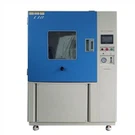
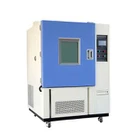
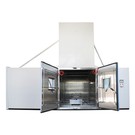

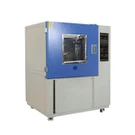
Dust is a common environmental factor that can have significant impacts on various products and equipment. Measuring dust accurately is crucial for ensuring the performance, reliability, and safety of these items. As a leading dust tester supplier, we understand the importance of providing accurate and reliable dust measurement solutions, especially in different vibration environments. In this blog post, we will explore how our dust testers measure dust in various vibration scenarios and why this is essential for your testing needs.
The Basics of Dust Measurement
Before delving into the impact of vibration on dust measurement, let's first understand the basic principles of dust measurement. Dust testers typically work by collecting air samples and analyzing the concentration of dust particles within them. There are several methods used for dust measurement, including gravimetric, optical, and electrical methods.
Gravimetric methods involve collecting dust particles on a filter and weighing the filter before and after sampling to determine the mass of the collected dust. This method is considered the most accurate but can be time - consuming and labor - intensive.
Optical methods use light scattering to detect and measure the size and concentration of dust particles. These methods are fast, non - invasive, and can provide real - time data. However, they may be affected by factors such as particle shape, refractive index, and the presence of other light - absorbing substances in the air.


Electrical methods rely on the electrical properties of dust particles, such as their charge or conductivity. These methods are sensitive and can detect very small particles, but they may also be influenced by environmental factors such as humidity and temperature.
The Impact of Vibration on Dust Measurement
Vibration is a common phenomenon in many industrial and real - world environments. It can be caused by machinery operation, transportation, or even natural events such as earthquakes. Vibration can have several effects on dust measurement:
Particle Resuspension
Vibration can cause settled dust particles to become resuspended in the air. This can lead to an increase in the measured dust concentration, even if the actual amount of dust being generated has not changed. For example, in a manufacturing plant where heavy machinery is in operation, the vibration from the machines can shake loose dust that has settled on surfaces, causing it to enter the air and be detected by the dust tester.
Instrument Stability
Vibration can also affect the stability of the dust tester itself. If the tester is not properly secured or designed to withstand vibration, it may produce inaccurate readings. For instance, in a vehicle - mounted dust testing system, the constant vibration from the vehicle's movement can cause the internal components of the tester to shift or become misaligned, leading to errors in measurement.
Sampling Efficiency
The sampling efficiency of the dust tester can be influenced by vibration. Vibration can disrupt the air flow pattern around the sampling inlet, causing uneven sampling or even preventing dust particles from entering the tester. This can result in an underestimation or overestimation of the actual dust concentration.
How Our Dust Testers Overcome Vibration Challenges
At our company, we have developed advanced dust testers that are specifically designed to measure dust accurately in different vibration environments. Here's how our testers address the challenges posed by vibration:
Anti - Vibration Design
Our dust testers are built with anti - vibration features to ensure their stability. We use high - quality shock - absorbing materials and precision - engineered components to minimize the impact of vibration on the internal mechanisms of the tester. This helps to maintain the accuracy and reliability of the measurement, even in highly vibrating environments.
Resuspension Compensation
To account for particle resuspension caused by vibration, our dust testers are equipped with advanced algorithms. These algorithms analyze the data over time and can distinguish between the natural fluctuations in dust concentration and the spikes caused by resuspension. By compensating for resuspension, we can provide more accurate and representative dust concentration readings.
Improved Sampling Design
We have optimized the sampling design of our dust testers to ensure efficient and consistent sampling in the presence of vibration. The sampling inlets are designed to minimize the influence of air flow disturbances caused by vibration, and the internal flow channels are engineered to ensure that dust particles are evenly distributed and accurately measured.
Applications in Different Vibration Environments
Our dust testers have been successfully applied in a wide range of vibration environments:
Industrial Manufacturing
In industrial manufacturing plants, there is often a high level of vibration from machinery such as presses, conveyors, and pumps. Our dust testers can accurately measure the dust concentration in these environments, helping to ensure compliance with occupational health and safety regulations and to protect the health of workers.
Transportation
In the transportation industry, vehicles such as trucks, trains, and airplanes are subject to constant vibration. Our dust testers can be installed on these vehicles to monitor the dust levels inside the cabins or in the exhaust systems, providing valuable data for air quality management and emissions control.
Construction Sites
Construction sites are characterized by high levels of vibration from heavy equipment such as excavators, bulldozers, and cranes. Our dust testers can be used to measure the dust generated during construction activities, helping to minimize the environmental impact and protect the health of workers and nearby residents.
Complementary Testing Equipment
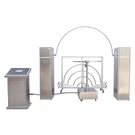
In addition to our dust testers, we also offer a range of complementary testing equipment to meet your comprehensive environmental testing needs. For water - related testing, we provide IPX5 IPX6 Water Test Chamber, Rain Chamber, and Waterproof Water Ingress Test Chamber. These chambers are designed to simulate different water - exposure scenarios and can be used to test the waterproof performance of various products.
Why Choose Our Dust Testers
When it comes to dust measurement in different vibration environments, our dust testers offer several advantages:
High Accuracy
Our testers are designed to provide accurate and reliable dust concentration data, even in the presence of vibration. Through advanced technology and rigorous calibration, we ensure that the measurements are as close to the actual values as possible.
Robust Design
Built with high - quality materials and advanced engineering, our dust testers are robust and can withstand the harsh conditions of vibration - prone environments. They are designed to be durable and require minimal maintenance.
Customizable Solutions
We understand that different customers have different testing needs. That's why we offer customizable dust testing solutions. Whether you need a portable tester for on - site measurements or a fixed - installation system for continuous monitoring, we can provide a solution that meets your specific requirements.
Contact Us for Your Dust Testing Needs
If you are in need of a reliable dust tester for measuring dust in different vibration environments, look no further. Our team of experts is ready to assist you in selecting the right product for your application. We can also provide technical support, training, and after - sales service to ensure that you get the most out of your dust testing equipment. Contact us today to start a discussion about your dust testing requirements and let us help you find the perfect solution.
References
- Brown, R. C. (2007). "Aerosol Measurement: Principles, Techniques, and Applications". Wiley - Interscience.
- Hinds, W. C. (1999). "Aerosol Technology: Properties, Behavior, and Measurement of Airborne Particles". Wiley - Interscience.
- ISO 12103 - 1:1997. "Test dusts for filters used in air intakes of internal combustion engines - Part 1: Arizona road dust".