Have you ever wondered how engineers ensure that a smartphone still works in -40°C winter conditions or 95% humidity tropical environments? In real-world product development, laboratory conditions must go far beyond room temperature stability. Even a small fluctuation of 2°C or 5% RH can change test results completely.
A recent customer from Romania shared positive feedback after installing a LIB controlled environment chamber: "The chamber was successfully installed. As far as I know everything is ok, I don't have any complaints from my colleagues. If any issues arise, we will contact you." This real-world experience highlights not only the reliability of the equipment but also its ease of installation and stable day-to-day performance in laboratory environments.
That is why modern reliability testing relies on controlled environment chambers-systems that can simulate real-world stress conditions with high precision and repeatability. A controlled environment chamber can simulate temperature, humidity, light exposure, salt spray, rain, and dust conditions. Today, we will focus specifically on the most commonly used type: the controlled environment chamber for temperature and humidity testing.
Temperature and Humidity Control Range in Controlled Environment Chambers
1. Temperature Control Range
Controlled environment chambers typically offer a wide temperature range from -70°C to +150°C, depending on system configuration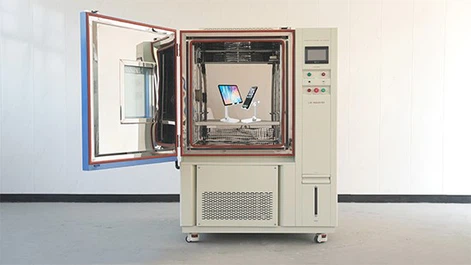 and compressor design.
This range allows manufacturers to simulate extreme conditions such as Arctic cold starts, desert heat exposure, or electronic component overheating scenarios. For example, automotive ECU testing is often conducted between -40°C and +85°C, while aerospace components may require full-cycle testing from -55°C to +125°C.
The ability to maintain such a wide range with stability is essential for accelerated life testing and product validation.
2. Humidity Control Range
Humidity simulation generally ranges from 20% RH to 98% RH under controlled temperature conditions.
Typical applications include:
- Electronics storage testing at 85% RH
- Battery aging tests at 60%–90% RH
- Pharmaceutical stability tests at 40°C / 75% RH
Humidity variation directly affects corrosion, insulation performance, and material degradation, making precise control essential.
3. Accuracy and Stability Standards
Modern controlled environment chambers are expected to meet strict performance criteria:
| Temperature accuracy | ±0.5°C |
| Temperature uniformity | ±1.5°C |
| Humidity accuracy | ±2.5% RH |
| Humidity stability | ±3% RH |
In high-end laboratories, sensors such as PT100 Class A probes are used to ensure long-term reliability and traceable calibration. These accuracy levels align with international standards such as IEC 60068 and ISO 16750.
Working Principle of LIB Controlled Environment Chamber
The LIB controlled environment chamber is designed based on a closed-loop environmental simulation system.
First, temperature control is achieved through a refrigeration system using cascade compressors (for low temperature models) and electric heating elements for heating phases. A PID controller continuously adjusts output to maintain stable conditions.
Second, humidity is generated through a steam humidification and dehumidification system. Water is precisely atomized into vapor and mixed with circulating airflow.
Third, multi-directional centrifugal fans ensure uniform air distribution inside the chamber. Air velocity and direction are optimized to eliminate dead zones and maintain a variation of less than ±1.5°C and ±2.5% RH across the chamber space.
Finally, real-time feedback sensors continuously send data to the controller, ensuring closed-loop correction within seconds.
This integrated system ensures that every test condition is stable, repeatable, and compliant with international reliability testing standards.
Popular Controlled Environment Chambers
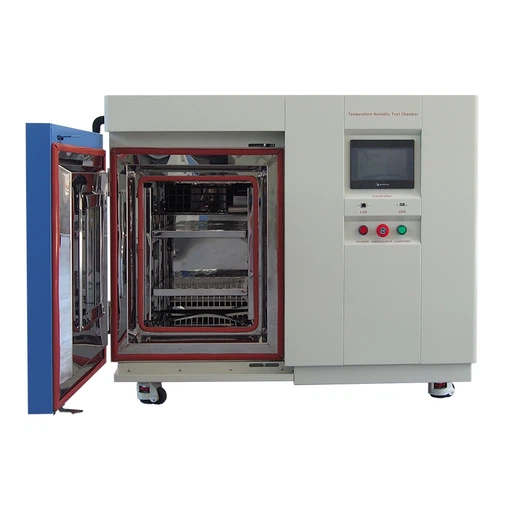
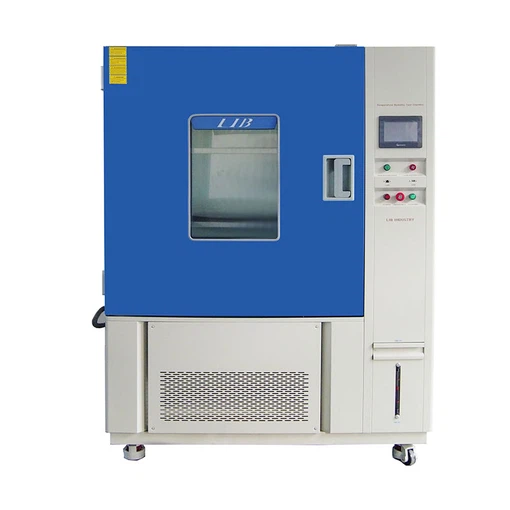
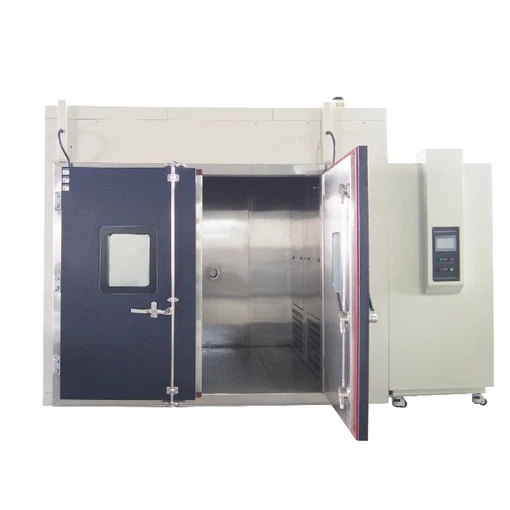


Automotive Component Testing Based on IEC 60068 Standard by LIB Controlled Environment Chamber
1. IEC 60068 Thermal Cycling Requirement
The IEC 60068-2-14 standard defines temperature cycling tests commonly used for automotive components. A typical test cycle includes:
| Stage | Condition |
|---|---|
| Low temperature | -40°C (hold 30 min) |
| Transition | Heating up to +85°C at controlled ramp rate |
| High temperature | +85°C (hold 30 min) |
| Cycle repetition | 500–1000 cycles depending on test severity |
This cycle is used to evaluate solder joint fatigue, plastic deformation, and electronic stability under repeated thermal stress.
2. LIB Controlled Environment Chamber Application Example
A commonly used model such as the LIB TH-800 Constant Temperature and Humidity Chamber is capable of performing full IEC 60068 thermal cycling tests.
Performance capability:
|
|
Name | Temperature Humidity Chamber for Composites | ||||
|
Model |
TH-100 |
|||||
|
Internal dimension (mm) |
400*500*500 |
|||||
|
Overall dimension (mm) |
860*1050*1620 |
|||||
|
Capacity |
100L |
|||||
|
Temperature range |
-20℃ ~+150 ℃ |
|||||
|
Low type |
A: -40℃ B:-70℃ C -86℃ |
|||||
|
Humidity Range |
20%-98%RH |
|||||
|
Temperature deviation |
± 2.0 ℃ |
|||||
|
Heating rate |
3 ℃ / min |
|||||
|
Cooling rate |
1 ℃ / min |
|||||
|
Controller |
Programmable color LCD touch screen controller, Multi-language interface, Ethernet , USB |
|||||
|
Refrigerant |
R404A, R23 |
|||||
|
Exterior material |
Steel Plate with protective coating |
|||||
|
Interior material |
SUS304 stainless steel |
|||||
|
Standard configuration |
1 Cable hole (Φ 50) with plug; 2 shelves |
|||||
|
Timing Function |
0.1~999.9 (S,M,H) settable |
|||||

|
|
|
|
|
|
| Robust Workroom | Cable Hole | Temperature and Humidity Sensor | PID controller |


3. Advantages of LIB Chamber in Automotive Testing
1. High Precision Control – Ensures stable IEC 60068 compliance with minimal deviation.
2. Fast Cycling Performance – Reduces test time by up to 40% compared to conventional systems.
3. Uniform Airflow Design – Eliminates local temperature deviation for multi-sample testing.
4. Smart Automation System – Supports 120 programmable test profiles with real-time monitoring and data export.
FAQs on LIB Controlled Environment Chamber
Q1: Does LIB provide installation support and training?
Yes. LIB provides full installation guidance, remote commissioning, and optional on-site training depending on region and project requirements. Most chambers are ready to operate within 2–3 hours after delivery.
Q2: How is the equipment shipped and protected during transportation?
All chambers are packed using reinforced wooden export crates with shock-proof internal structures. Critical components such as compressors and sensors are fixed to prevent vibration damage during long-distance shipping.
Q3: What after-sales service is available?
LIB provides:
1. 3 YEARS warranty depending on model
2. Lifetime technical support
3. Remote diagnostics via Ethernet connection
4. Spare parts supply within 48–72 hours for urgent cases
Q4: Can the chamber be customized for special testing needs?
Yes. Custom options include:
1. Extended temperature range (-86°C models)
2. Additional cable holes
3. Reinforced shelving systems
4. Special data acquisition interfaces for laboratory integration
A controlled environment chamber is not just a testing device-it is a critical system for ensuring product reliability before market release. With precise temperature and humidity control, engineers can simulate real-world stress conditions and identify potential failures early in development.
LIB's controlled environment chamber combines IEC-standard compliance, high precision control (±0.5°C / ±2.5% RH), and intelligent automation, making it suitable for automotive, electronics, aerospace, and pharmaceutical industries.
Whether you are performing thermal cycling, humidity aging, or stability testing, LIB provides a stable and reliable platform for every stage of product validation.
Contact LIB Industry for technical consultation, customized solutions, or a live demonstration of controlled environment chamber performance.