Outdoor sunlight, heat, humidity, and rain can gradually damage products in just a few months. Plastic parts may crack, automotive coatings may fade, and textile colors may lose brightness. However, waiting 1–3 years for natural outdoor exposure testing is too slow for modern product development and quality control.
A customer from the Philippines recently shared positive feedback after relocating their LIBXenon Arc Weathering Test Chamberto a new facility. After installation, the customer confirmed that the chamber had been "running smoothly." During operation, the customer also consulted LIB about the X6 water shortage alarm. LIB engineers quickly explained that when the water temperature becomes too high during testing, hot water is discharged automatically, and connecting an automatic water supply system is recommended for stable long-term operation. Regular annual calibration of temperature, humidity, and irradiance by an ISO17025-qualified laboratory was also advised to maintain testing accuracy.
This article explains what a Xenon Arc Weathering Test Chamber is used for, how it works, which international standards it follows, and why accelerated xenon testing has become one of the most reliable methods for evaluating long-term weather resistance in industries worldwide.
Xenon Arc Weathering Test Chamber Used For
1. Automotive Industry Weather Resistance Testing
Automotive manufacturers widely use Xenon Arc Weathering Test Chambers to test the durability of exterior and interior components exposed to sunlight, heat, and moisture. Common test samples include dashboards, bumpers, rubber seals, coatings, paints, and plastic trims.
The chamber simulates real outdoor environments including: Full-spectrum sunlight exposure, UV radiation, High temperature aging, Humidity cycling, Rain spraying
Compared with natural outdoor exposure testing that may require 12–36 months, xenon accelerated testing can produce repeatable aging results within several days or weeks.
Common automotive standards include: ASTM G155, ISO 4892-2, SAE J2527, SAE J2412
For example, SAE J2527 is commonly used for automotive exterior materials and includes cycles of:
① 102 minutes light exposure
18 minutes light + water spray
Black panel temperature around 63°C
Controlled irradiance at 340 nm
This testing helps manufacturers evaluate:, Color fading, Gloss retention, Cracking, Surface chalking, Mechanical property degradation
2. Textile and Fabric Light Fastness Testing
The textile industry uses Xenon Arc Weathering Test Chambers to evaluate color fastness and material durability under sunlight exposure. Clothing, outdoor fabrics, curtains, carpets, and automotive textiles all require weather resistance verification before entering the market.
The chamber can simulate: Direct sunlight, Indoor daylight through window glass, Heat and humidity changes, Wetting and drying cycles
Compared with traditional outdoor fabric exposure tests, xenon testing provides faster and more standardized results with excellent repeatability.
Common textile testing standards include: ISO 105-B02, AATCC TM16. ISO 105-B02 is one of the most widely used standards for textile light fastness testing. The chamber compares color changes between tested samples and blue wool reference standards after controlled xenon exposure.
Manufacturers use these tests to evaluate: Color fading resistance, Yellowing resistance, Fabric durability, Coating stability
3. Plastics and Coatings Accelerated Aging Testing
Plastic products and industrial coatings are highly sensitive to ultraviolet radiation and environmental stress. Xenon Arc Weathering Test Chambers are commonly used in electronics, construction materials, packaging, aerospace, and consumer products industries.
The equipment reproduces: Solar radiation, Condensation, Moisture exposure, Temperature cycling, Rain simulation
Compared with natural weather exposure, accelerated xenon testing significantly shortens product validation time while maintaining high correlation with outdoor aging performance.
Common standards include: ISO 4892-2, ASTM D6695, ASTM D2565, IEC 60068-2-5
Typical tested materials include: Engineering plastics, Powder coatings, Paint systems, Rubber products, Composite materials
Engineers evaluate: Tensile strength retention, Surface cracking, Brittleness, Discoloration, Adhesion performance
Popular light aging and climatic test chambers


How the LIB Xenon Arc Weathering Test Chamber Works
The LIB Xenon Arc Weathering Test Chamber uses a full-spectrum water-cooled xenon arc lamp to simulate natural sunlight from ultraviolet to visible and infrared wavelengths. Its spectral distribution closely matches real sunlight, making it one of the most realistic accelerated weathering methods available.
ASTM G155 is one of the most commonly used international standards for xenon arc accelerated weathering testing. It is widely applied in automotive, coatings, plastics, and polymer industries.
1. Typical ASTM G155 Test Cycle
A common ASTM G155 Cycle 1 condition includes:
| ASTM G155 Cycle Parameters | Condition |
|---|---|
| Light Exposure Time | 102 minutes |
| Light + Water Spray Time | 18 minutes |
| Irradiance | 0.35 W/m² at 340 nm |
| Black Panel Temperature | 63°C |
| Chamber Humidity | Approximately 50% RH |
This cycle continuously repeats to accelerate material aging and reproduce years of outdoor exposure within weeks or months.
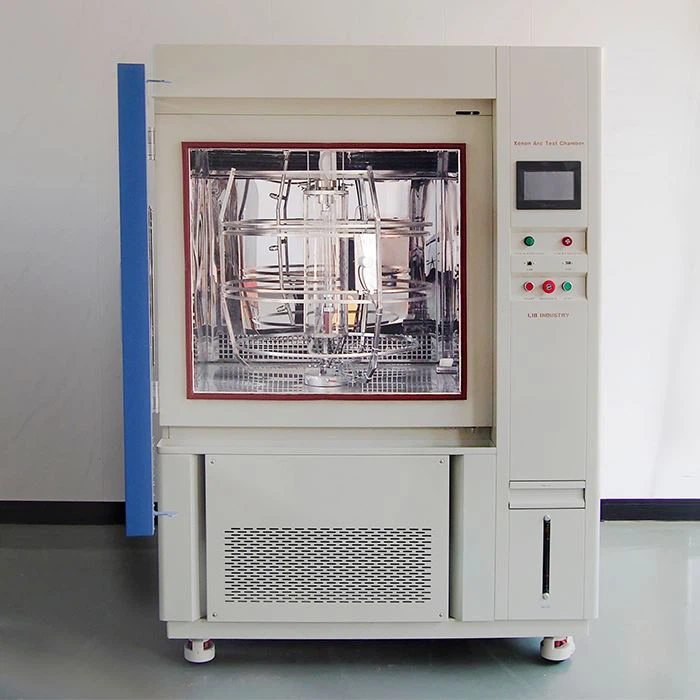
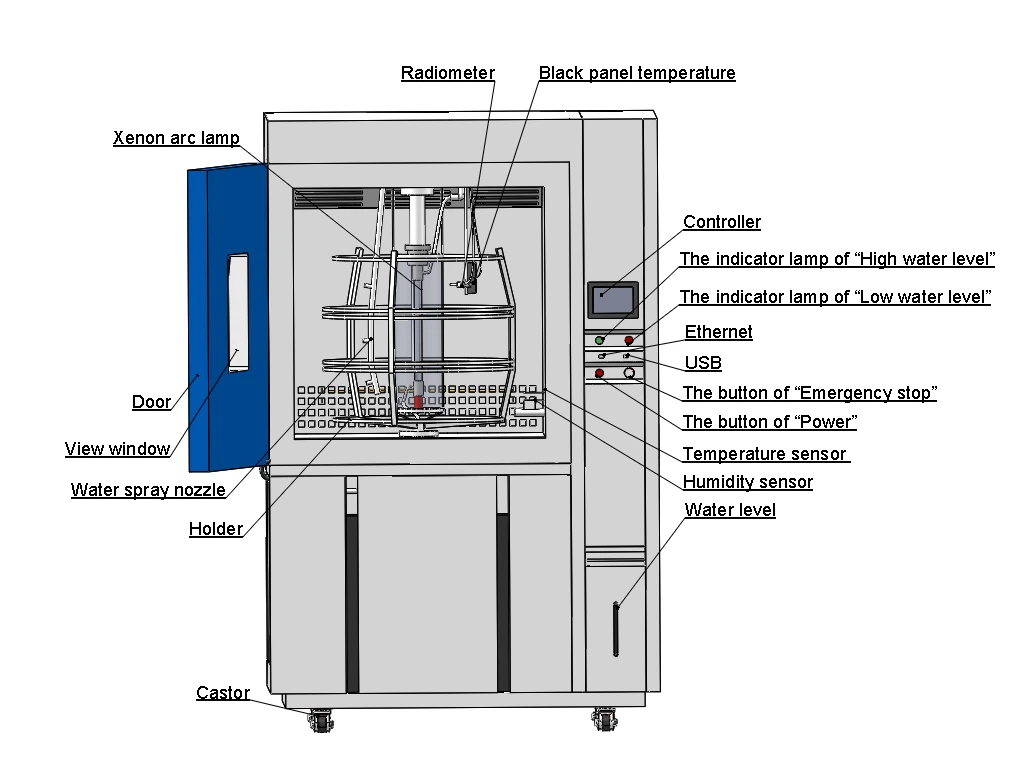
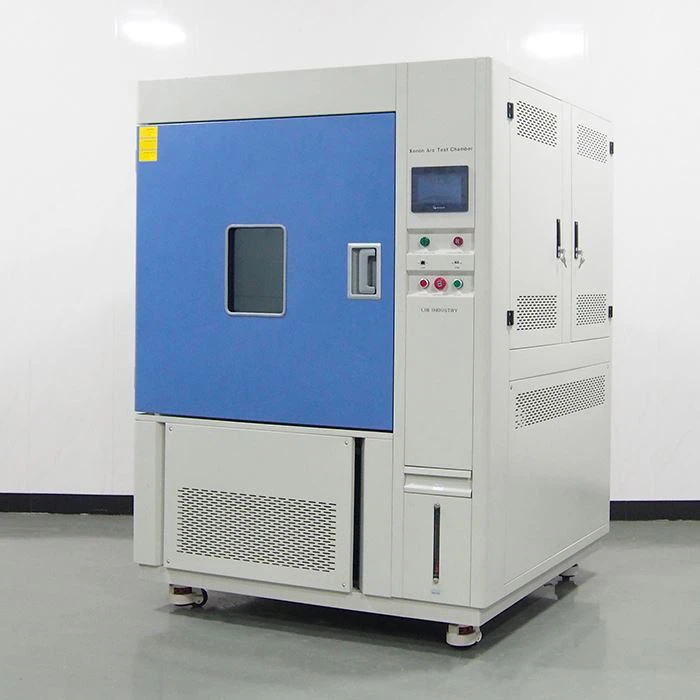
2. Recommended LIB Model: XL-S-750 Xenon Arc Weathering Test Chamber
The LIB XL-S-750 model is designed for high-precision ASTM G155 testing applications.
Key specifications include:
|
|
 |
 |
|
|
Model |
XL-S-750 Xenon Arc Weathering Test Chamber |
|
Internal Dimension (mm) |
950*950*850 mm |
|
Overall Dimension (mm) |
1300*1420*1800 mm |
|
Sample holder |
Adjustable speed, 1r /min |
|
Chamber Type |
Rotating Holder |
|
Irradiation Source |
1 piece of 4500w water-cooled xenon arc lamp with inner quartz and outer borosilicate filter |
|
Irradiance Range |
150 W/㎡ |
|
Bandwidth Measurement |
300~400 nm |
|
Chamber Temperature Range |
-40~ 100 ℃ ±2 ℃ |
|
Black Panel Temperature |
BPT 35 ~ 85 ℃ ±2 ℃ |
|
Humidity Range |
30 % ~ 98 % RH |
|
Water Spray Cycle |
1~9999 H 59 M (Adjustable) |
|
Controller |
Programmable color LCD touch screen controller |
|
Radiometer |
UV Radiometer, Tolerance: ±5 % |
3. Why Choose LIB Xenon Arc Weathering Test Chamber?
① Highly Accurate Sunlight Simulation
The xenon arc lamp closely matches natural sunlight spectra from UV to infrared wavelengths, improving correlation with real outdoor exposure results.
|
|
|


xenon lamp and filters
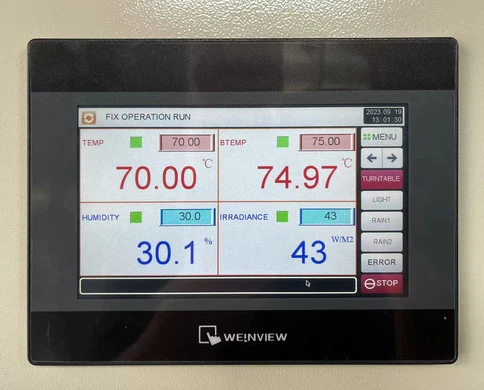
② Stable and Precise Irradiance Control
Advanced PID control and PT100 sensors maintain highly stable testing conditions for long-duration aging tests.
 |
 |
③ Faster Product Validation
Accelerated weathering significantly reduces testing cycles from years to weeks, helping manufacturers shorten product development time.
 |
|
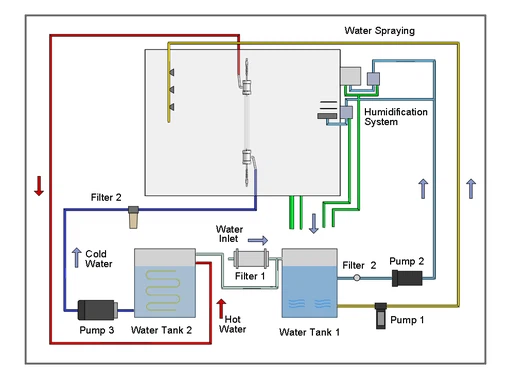
| Spraying system provides uniform water over specimens. Automatic water supply, filtration, and drainage ensure uninterrupted long-term testing. | |

④ Durable Chamber Structure
The SUS304 stainless steel interior resists corrosion, moisture, and high-temperature aging during continuous operation.
|
|
|
| Workroom |
Hanging specimen |


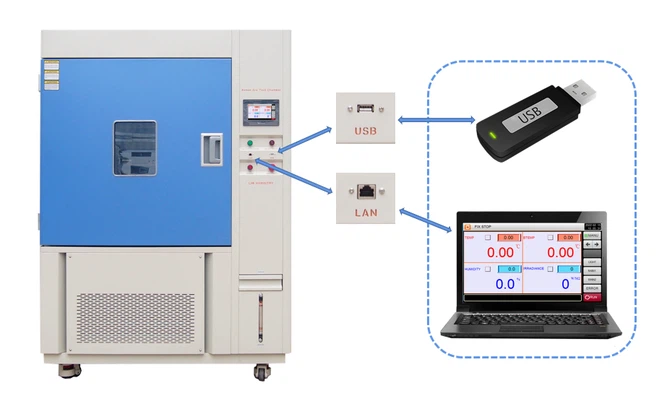
⑤ Smart Operation and Data Management
The color touchscreen controller supports programmable test profiles, multilingual operation, computer connection, and automatic data export.
FAQs on the LIB Xenon Arc Weathering Test Chamber
1. What standards does the LIB Xenon Arc Weathering Test Chamber support?
The equipment supports multiple international standards including: ASTM G155, ISO 4892-2, SAE J2527, SAE J2412, ISO 105-B02, AATCC TM16, IEC 60068-2-5
2. How long does xenon weathering testing usually take?
Most accelerated aging tests require several days to several weeks depending on the material type, irradiance level, and testing standard. This is much faster than natural outdoor exposure testing.
3. What materials can be tested?
Common materials include: Plastics, Rubber, Automotive coatings, Paints, Textiles, Electronic materials, Composite materials
4. Does LIB provide installation and technical support?
Yes. LIB provides: Equipment installation guidance, Remote technical support, Operation training, Maintenance assistance, Testing consultation services
5. How is the equipment shipped internationally?
LIB typically uses: Wooden export packaging, Moisture-proof protection, Sea freight or air freight transportation. The equipment is tested before shipment to ensure safe international delivery and stable operation after installation.
The LIB Xenon Arc Weathering Test Chamber delivers reliable accelerated aging results with precise sunlight simulation, stable environmental control, and compliance with major international standards.
Contact LIB Industry today to learn more about customized xenon weathering testing solutions for your laboratory and product validation projects.