Corrosion costs the global economy more than USD 2.5 trillion every year, according to international studies. For manufacturers of coatings, fasteners, automotive parts, and metal components, even a small rust failure can lead to warranty claims, recalls, or brand damage. That is why accelerated corrosion testing has become a standard step before product release.
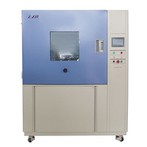
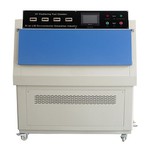
LIB ASTM B117 Salt Spray Machine is designed to simulate aggressive salt fog environments in a controlled, repeatable, and standards-compliant way. Built in accordance with ASTM B117, ISO 9227, ASTM G85, JIS Z 2371, SAE J2334, IEC 60068, and IEC 61701, it provides precise salt spray exposure for reliable material evaluation.
Why ASTM B117 Salt Spray Machine Was Developed
ASTM B117 was introduced in 1939 to standardize salt spray corrosion testing. Before this standard, laboratories used inconsistent methods, leading to unreliable results. ASTM B117 created a unified procedure for generating neutral salt fog in a controlled chamber at 35 ± 2 °C, ensuring global comparability.
The machine simulates marine and industrial atmospheres. It atomizes a 5 % NaCl solution (pH 6.5–7.2) into a fine mist, producing a deposition rate of 1–2 mL per 80 cm² per hour under a spray pressure of approximately 83 kPa. This recreates coastal exposure in days instead of years.
It accelerates corrosion testing while maintaining precision. Natural exposure may take 6–24 months to show visible rust. ASTM B117 testing can generate comparable corrosion results within 24–1000+ hours, depending on material and coating type.
It ensures compliance with international standards. Besides ASTM B117 (NSS), the system also supports:
ISO 9227 (NSS/AASS/CASS)
ASTM G85 (Modified salt spray)
SAE J2334 (Cyclic automotive corrosion)
IEC 60068 & IEC 61701 (Electronics and photovoltaic testing)
ISO 4524 / ASTM B604 (Electroplated coatings)
| Test Method | Salt Solution | pH Range | Temperature | Spray Pressure | Deposition Rate | Notes |
|---|---|---|---|---|---|---|
| NSS (Neutral Salt Spray) | 5 % NaCl | 6.5–7.2 | 35 ± 2 °C | 83 kPa | 1–2 mL/80 cm²·h | Baseline general corrosion resistance |
| AASS (Acetic Acid Salt Spray) | 5 % NaCl + glacial acetic acid | 3.1–3.3 | 35 ± 2 °C | 83 kPa | 1–2 mL/80 cm²·h | Decorative/electroplated coatings |
| CASS (Copper-Accelerated Acetic Acid Salt Spray) | 5 % NaCl + glacial acetic acid + 0.26 g/L CuCl₂ | 3.1–3.3 | 35 ± 2 °C | 83 kPa | 1–2 mL/80 cm²·h | High-performance coating acceleration |
It is widely used to test protective performance. Typical applications include:
Coating adhesion and blister resistance (ASTM D610, D714, D1654)
Plating thickness and durability
Fastener corrosion rating
Automotive body panels
Aluminum, zinc, and galvanized steel performance

Salt Spray Machine for Corrosion Test
LIB ASTM B117 Salt Spray Machine Coating Test Method
ASTM B117 defines strict environmental parameters. The chamber must maintain:
Temperature: 35 ± 2 °C
Salt solution: 5 % NaCl
pH: 6.5–7.2
Collection rate: 1–2 mL/80 cm²·h
Continuous fog exposure
LIB machines are engineered to meet and exceed these parameters.
  |
|||
|
Model |
S-150 |
||
|
Internal dimensions (mm) |
470*590*400 |
||
|
Overall dimensions (mm) |
620*1400*1050 |
||
|
Temp. Range |
Ambient ~ +60 degree |
||
|
Temp. Fluctuation |
± 0.5 ℃ |
||
|
Temp. Deviation |
± 2.0℃ |
||
|
Humidity Range |
95 % ~ 98 % RH |
||
|
Salt Fog Deposition |
1~2ml / 80cm2 · h |
||
|
Spray Type |
Continuous / Periodic |
||
|
Heating Element |
Nichrome heater |
||
|
Salt Fog Collected |
Fog collector and fog measure cylinder |
||
|
Controller |
PID controller |
||
|
Material |
Glass fiber reinforced plastics |
||
|
Standard Configuration |
8 round bars and 7 V-shaped grooves |
||
|
salt spray tower |
cylinder |
spray collector |


Step 1: Prepare and stabilize the salt solution.
The system automatically mixes and monitors salt concentration and pH values.
LIB Advantage: Built-in pH monitoring and data logging ensure traceable compliance with ASTM B117 and ISO 9227.
Step 2: Atomize salt fog with stable pressure.
Compressed air passes through a saturated barrel and quartz nozzle to create uniform mist.
LIB Advantage: Corrosion-resistant quartz nozzles and adjustable spray towers maintain 83 kPa stable pressure and prevent clogging.
Step 3: Maintain chamber temperature and deposition rate.
PT-100 Class A sensors (accuracy up to 0.001 °C) monitor internal temperature.
LIB Advantage: PID control system keeps temperature within ±0.5 °C, ensuring repeatable results.
Step 4: Collect and verify spray settlement.
ASTM requires measurement using calibrated collectors.
LIB Advantage: Real-time measuring cylinders verify compliance with 1–2 mL/80 cm²·h, preventing invalid test claims.
Step 5: Evaluate coating performance.
After exposure (e.g., 240 h, 480 h, 720 h), samples are assessed per:
ASTM D610 (Rust grading)
ASTM D714 (Blistering)
ASTM D1654 (Creepage from scribe)
ISO 2409 (Adhesion)
How LIB ASTM B117 Salt Spray Machine Controls Stable Salt Fog
Stable atomization ensures uniform corrosion exposure. The system uses a precision air regulator and saturated barrel to preheat and humidify compressed air, preventing dry spray or uneven fog.
Precise environmental monitoring guarantees repeatability. PT-100 sensors and PID controllers maintain constant temperature at 35 °C, while spray pressure remains at 83 kPa for stable mist density.
Corrosion-resistant construction extends chamber lifespan.
Interior: One-piece formed fiberglass reinforced plastic
Exterior: Powder-coated A3 steel
Inverted-V transparent lid prevents condensation dripping on specimens
Flexible interior design improves efficiency. Adjustable V-groove and round rod sample holders accommodate various shapes and sizes, while removable racks simplify cleaning.
Smart control enhances traceability.
7-inch touchscreen controller
Up to 120 programmable test profiles (100 steps each)
Real-time logging of temperature, spray time, and pH
Data export via USB or Ethernet
|
Classify |
Type 1 |
Type 2 |
Type 3 |
|
Name |
Salt Spray Test Chamber |
Salt Cyclic Corrosion Test Chamber |
Salt and So2 Corrosion Test Chamber |
|
|
|
|
|
|
Model |
S-150, S-250, S-750 S-010, S-016, S-020, |
SC-010, SC-016, SC-020 |
SSC-010, SSC-016, SSC-020 |
|
Test Standard |
ASTM B117; ISO9227 (NSS, NASS, CASS ); |
ASTM B117; ISO9227; IEC60068-2-52; |
ASTM B117; ISO9227; IEC60068-2-52; ASTM G85 (A4); |
|
Function |
Salt fog spray; Temp (Ambient ~+60℃) |
Salt fog Spray; Temp (+10℃ ~+90℃); Humid (30% ~98%RH); |
Salt fog Spray; Temp (+10℃ ~+90℃); Humid (30% ~98%RH); So2 gas; |


FAQs on the ASTM B117 Salt Spray Machine
Q1: What is the difference between NSS, AASS, and CASS?
NSS uses neutral 5 % NaCl (pH 6.5–7.2).
AASS reduces pH to 3.1–3.3 using acetic acid.
CASS adds copper chloride for faster corrosion acceleration.
Q2: How long should a salt spray test run?
Common durations are 24 h, 96 h, 240 h, 480 h, 720 h, or 1000 h, depending on product standards.
Q3: Does salt spray testing predict real service life?
It provides comparative performance data under controlled conditions. For automotive simulation, cyclic standards like SAE J2334 or ASTM G85 may be more representative.
Q4: Can LIB customize the system?
Yes. Options include:
Touchscreen upgrades for S-250 and S-750
Explosion-proof design
Walk-in salt spray chambers
Combined temperature-humidity-salt spray systems
Adjustable collector quantity and layout
LIB ASTM B117 Salt Spray Machine delivers accelerated, repeatable, and standards-compliant corrosion testing with precise control and intelligent monitoring.
Contact LIB Industry to get detailed specifications, technical guidance, and customized solutions for your laboratory.