

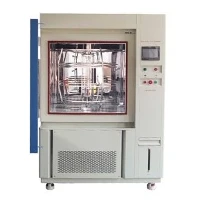
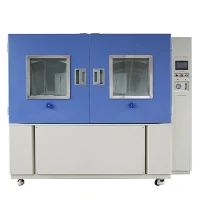
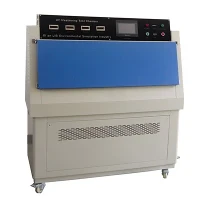
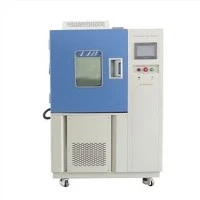
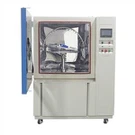

As a supplier of IPX9k testers, I often receive inquiries from customers in various industries, especially those involved in marine products. The question of whether the IPX9k tester can be used for marine products is a common one, and it's a topic that deserves in - depth exploration.


Understanding the IPX9k Standard
The IP (Ingress Protection) code is an international standard that classifies the degree of protection provided by enclosures of electrical equipment against the intrusion of solid objects and water. The IPX9k standard specifically focuses on high - pressure, high - temperature water jet protection. It requires the test equipment to spray water at a pressure of 80 - 100 bar from a distance of 100 - 150 mm, with a water temperature of 80 ± 5°C, for a duration of 30 seconds per surface of the test specimen. This rigorous test is designed to simulate extreme conditions, such as those encountered in high - pressure cleaning environments in industrial settings.
The Demands of Marine Products
Marine products, including boats, submarines, offshore oil platforms, and various marine sensors and communication devices, face unique environmental challenges. They are constantly exposed to saltwater, high humidity, strong winds, and large waves. Saltwater is highly corrosive, and the constant movement of water can exert significant mechanical stress on the equipment. Additionally, marine products may need to withstand high - pressure water impact during rough sea conditions or when being washed down with high - pressure hoses for maintenance.
Can the IPX9k Tester Meet the Needs of Marine Products?
Advantages of Using IPX9k Testers for Marine Products
- High - Pressure Water Resistance Testing: The high - pressure water jet used in the IPX9k test can simulate the impact of large waves and high - pressure water flow in the marine environment. By subjecting marine products to this test, manufacturers can ensure that their products can withstand the pressure exerted by water during storms or high - speed navigation. For example, a boat's electrical control panel needs to be protected from water ingress to prevent short - circuits and malfunctions. The IPX9k test can help verify its water - tightness under high - pressure conditions.
- Material and Design Evaluation: The test can also evaluate the durability of the materials and the effectiveness of the design of marine products. High - temperature water used in the IPX9k test can accelerate the aging process of materials, revealing potential weaknesses in seals, gaskets, and enclosures. This allows manufacturers to improve their product design and select more suitable materials to enhance the overall performance and reliability of marine products.
Limitations of Using IPX9k Testers for Marine Products
- Saltwater Corrosion: The IPX9k test uses fresh water, while marine products are exposed to saltwater. Saltwater contains various salts and minerals that can cause corrosion and electrolysis, which are not fully represented in the IPX9k test. To fully assess the corrosion resistance of marine products, additional salt - spray tests or long - term immersion tests in saltwater are required.
- Mechanical Stress and Vibration: The marine environment is dynamic, with constant mechanical stress and vibration due to waves, engine operation, and ship movement. The IPX9k test mainly focuses on water ingress and does not consider the combined effects of mechanical stress and water exposure. Therefore, supplementary tests such as vibration tests and shock tests may be necessary to comprehensively evaluate the performance of marine products.
Complementary Testing Equipment
To fully evaluate the performance of marine products, in addition to the IPX9k tester, other ingress protection testing equipment can be used in combination.
- Ingress Protection Testing Equipment: This comprehensive range of testing equipment can cover different aspects of ingress protection, from dust resistance to water resistance at various levels. It provides a more complete evaluation of the enclosure's ability to protect the internal components of marine products.
- IPX5 IPX6 Rain Jet Test Chamber: The IPX5 and IPX6 tests simulate heavy rain and high - pressure water jets at a lower pressure compared to the IPX9k test. These tests can be used to evaluate the water - tightness of marine products under normal rain conditions or when being washed with a moderate - pressure hose.
- IP67 Test Chamber: The IP67 standard requires the equipment to be dust - tight and able to withstand immersion in water up to 1 meter for 30 minutes. This test can simulate the situation where marine products are accidentally submerged in water, providing an important evaluation of their water - resistance under static water conditions.
Conclusion
In conclusion, the IPX9k tester can be a valuable tool for testing marine products, especially in evaluating their high - pressure water resistance and the durability of materials and designs. However, it has limitations in simulating the full range of challenges faced by marine products, such as saltwater corrosion and mechanical stress. Therefore, it is recommended to use the IPX9k tester in combination with other ingress protection testing equipment to obtain a more comprehensive evaluation of marine products.
If you are a manufacturer of marine products looking for reliable ingress protection testing solutions, we, as a professional IPX9k tester supplier, are here to help. Our team of experts can provide you with customized testing solutions based on your specific requirements. Whether you need to test small marine sensors or large - scale offshore equipment, we have the right equipment and expertise to meet your needs. Contact us today to start a discussion about your testing requirements and explore how our products can enhance the quality and reliability of your marine products.
References
- International Electrotechnical Commission (IEC) standards related to IP codes.
- Industry reports on the testing requirements of marine products.