

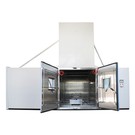

In the realm of industrial equipment, vacuum ovens play a crucial role in various applications, from research and development to manufacturing processes. As a seasoned vacuum oven supplier, I often encounter inquiries about the differences between single - chamber and multi - chamber vacuum ovens. Understanding these differences is essential for customers to make informed decisions based on their specific needs.
Single - Chamber Vacuum Ovens
A single - chamber vacuum oven, as the name suggests, consists of a single enclosed space where the vacuum and heating processes take place. This type of oven is a popular choice for many laboratories and small - scale manufacturing operations due to its simplicity and cost - effectiveness.
Design and Structure
The design of a single - chamber vacuum oven is relatively straightforward. It typically has a single chamber made of high - quality stainless steel or other heat - resistant materials. The chamber is sealed to maintain a vacuum environment, and it is equipped with heating elements, a vacuum pump, and temperature and pressure control systems. The simplicity of the design makes it easy to operate and maintain.
Advantages
- Cost - Effective: Single - chamber vacuum ovens are generally more affordable than their multi - chamber counterparts. This makes them an attractive option for businesses with budget constraints or those just starting out in the field.
- Ease of Use: With only one chamber to manage, the operation of a single - chamber vacuum oven is relatively simple. Operators can quickly learn how to set the temperature, pressure, and other parameters, reducing the need for extensive training.
- Space - Saving: For facilities with limited space, a single - chamber vacuum oven is a practical choice. It takes up less floor space compared to multi - chamber ovens, allowing for more efficient use of the available area.
Limitations
- Limited Capacity: The single - chamber design restricts the amount of material that can be processed at one time. If you need to handle large - volume production or multiple samples simultaneously, a single - chamber oven may not be sufficient.
- Lack of Flexibility: Once a process is started in a single - chamber oven, it can be difficult to interrupt or change the parameters without affecting the entire batch. This lack of flexibility can be a drawback in some applications where different processing conditions are required.
Multi - Chamber Vacuum Ovens
Multi - chamber vacuum ovens, on the other hand, feature two or more separate chambers within a single unit. This design offers several advantages over single - chamber ovens, especially for larger - scale operations.
Design and Structure
Multi - chamber vacuum ovens are more complex in design compared to single - chamber ovens. Each chamber has its own independent heating and vacuum systems, allowing for different processes to be carried out simultaneously. The chambers are usually separated by insulated walls to prevent heat transfer between them. The overall structure is more robust and may require a larger footprint.
Advantages
- Increased Capacity: The multiple chambers in a multi - chamber vacuum oven allow for a greater volume of material to be processed at the same time. This can significantly increase productivity, especially in high - volume manufacturing environments.
- Flexibility: With each chamber operating independently, different samples or batches can be processed under different conditions simultaneously. This flexibility is particularly useful in research and development settings where multiple experiments may need to be conducted concurrently.
- Efficient Use of Resources: Multi - chamber ovens can optimize the use of energy and other resources. For example, if one chamber is not in use, it can be shut down while the others continue to operate, reducing overall energy consumption.
Limitations
- Higher Cost: The increased complexity and functionality of multi - chamber vacuum ovens come at a higher price. The initial investment for a multi - chamber oven is typically greater than that of a single - chamber oven, which may be a deterrent for some businesses.
- More Complex Operation and Maintenance: Operating and maintaining a multi - chamber vacuum oven requires a higher level of technical expertise. The independent systems in each chamber need to be monitored and adjusted separately, and any issues that arise may be more difficult to diagnose and repair.
Applications
The choice between a single - chamber and a multi - chamber vacuum oven often depends on the specific application.
Single - Chamber Vacuum Oven Applications
- Small - Scale Research: In academic and industrial research laboratories, single - chamber vacuum ovens are commonly used for small - scale experiments. They are ideal for drying small samples, removing solvents, or conducting heat - treatment processes on a limited number of specimens.
- Prototyping: For companies involved in product prototyping, a single - chamber vacuum oven can be used to test and refine new products. The simplicity of the oven allows for quick and easy adjustments to the processing parameters during the prototyping phase.
Multi - Chamber Vacuum Oven Applications
- Mass Production: In manufacturing industries such as electronics, pharmaceuticals, and food processing, multi - chamber vacuum ovens are used for mass production. The ability to process large volumes of products simultaneously can significantly increase production efficiency and reduce costs.
- Diverse Research Projects: Research institutions that conduct a wide range of experiments may benefit from the flexibility of multi - chamber vacuum ovens. Different chambers can be used to test various materials or processes under different conditions, allowing for more comprehensive research.
Related Products
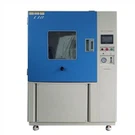
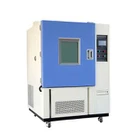
If you are considering a vacuum oven for your application, you may also be interested in other related products such as Heat Cold Moisture Chamber, Temp RH Chamber, and Temperature And Humidity Controlled Cabinet. These products can provide additional environmental control options for your testing and processing needs.
Conclusion
In conclusion, the choice between a single - chamber and a multi - chamber vacuum oven depends on a variety of factors, including your budget, production volume, and specific application requirements. Single - chamber vacuum ovens offer simplicity, cost - effectiveness, and space - saving benefits, making them suitable for small - scale operations and research. Multi - chamber vacuum ovens, on the other hand, provide increased capacity, flexibility, and efficiency, making them a better choice for large - scale production and diverse research projects.


As a vacuum oven supplier, I am here to help you make the right decision. Whether you need a single - chamber oven for your startup or a multi - chamber oven for your established manufacturing facility, I can provide you with the information and support you need. If you have any questions or would like to discuss your specific requirements, please feel free to contact me. I look forward to working with you to find the perfect vacuum oven solution for your business.
References
- "Vacuum Oven Technology and Applications" - Industrial Oven Handbook
- "Comparative Study of Single - Chamber and Multi - Chamber Vacuum Ovens" - Journal of Laboratory Equipment